Total Deposits
$280M ATH
Revenue
Overview
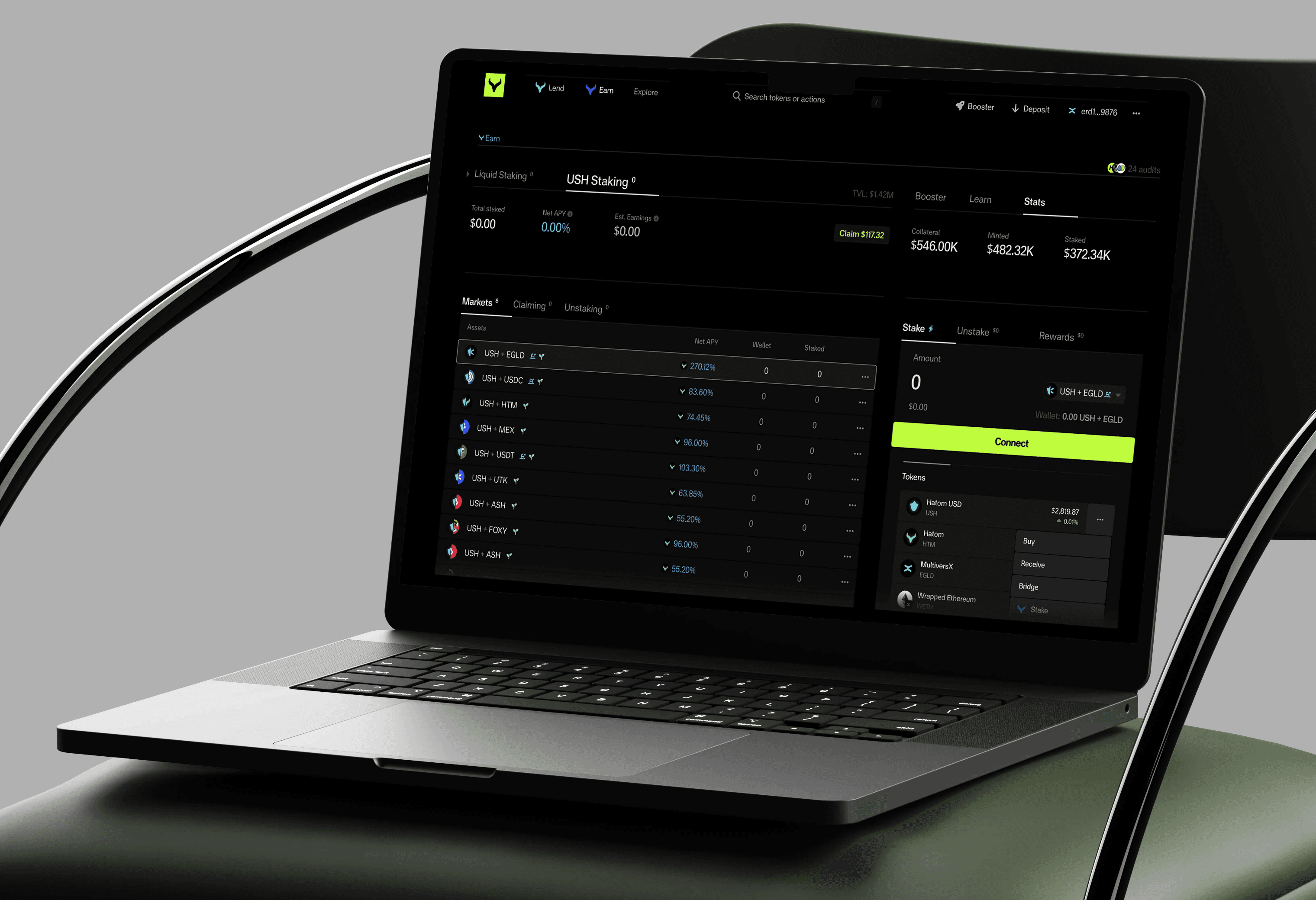
Hatom is a fintech ecosystem where users actively manage deposits, loans, yield and risks. I led UX / UX improvements across lending, staking, and a stablecoin module to make complex financial actions easy to understand and control. We are now developing the V2 of the app.
Hatom is a fintech ecosystem where users actively manage deposits, loans, yield and risks.
I led UX / UX improvements across lending, staking, and a stablecoin module to make complex financial actions easy to understand and control. We are now developing the V2 of the app.
Problem
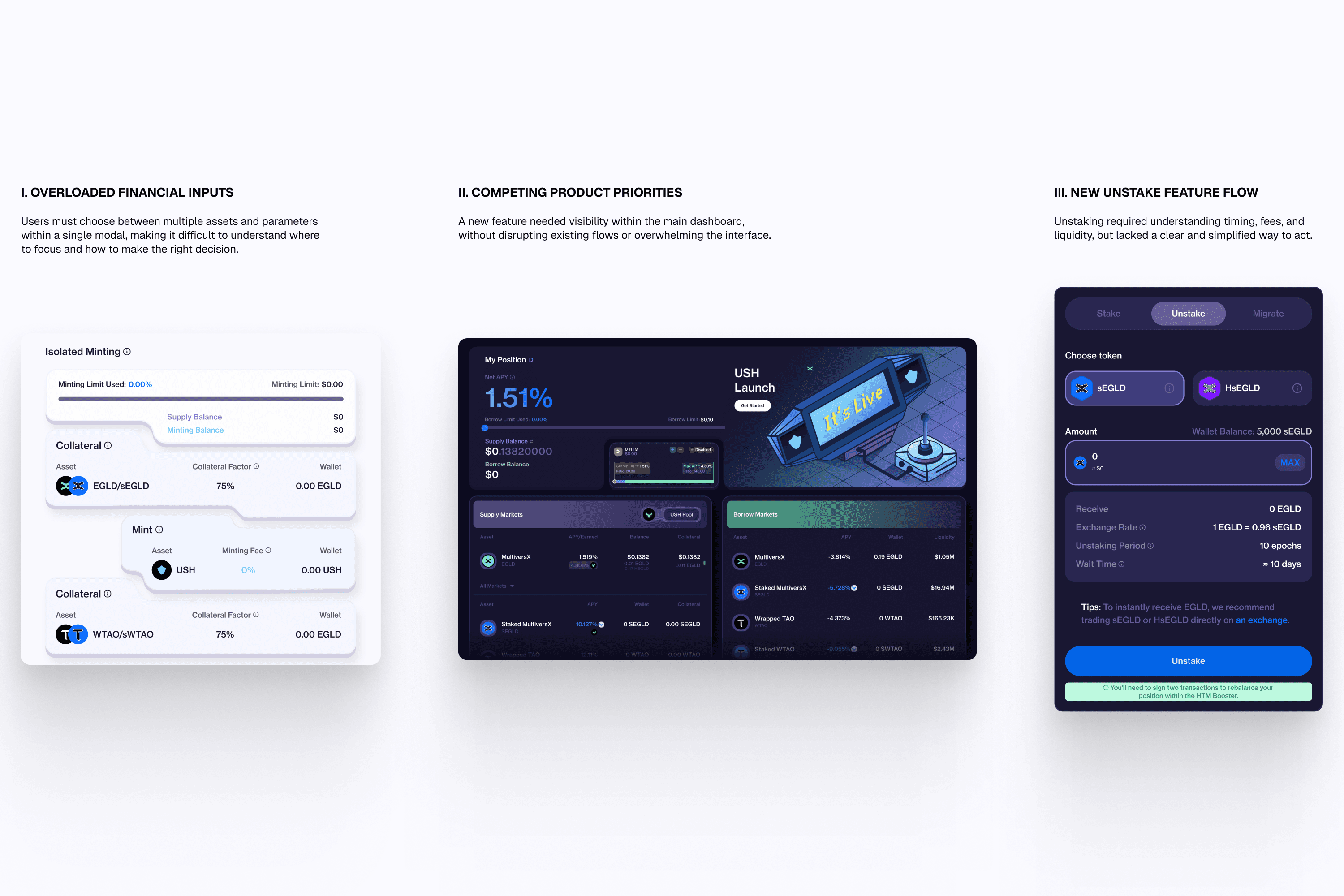
Hatom brings together multiple financial mechanisms into a single ecosystem, introducing complexity across different product areas. Users needed to navigate dense financial inputs, understand new features within existing flows, and make decisions involving timing, fees, and liquidity.
The challenge was not only presenting information, but structuring each interaction so users could clearly understand what to do and why. Without clear hierarchy and guidance, critical details were fragmented, making decisions harder and increasing cognitive load.
Problem
Hatom brings together multiple financial mechanisms into a single ecosystem, introducing complexity across different product areas. Users needed to navigate dense financial inputs, understand new features within existing flows, and make decisions involving timing, fees, and liquidity.
The challenge was not only presenting information, but structuring each interaction so users could clearly understand what to do and why. Without clear hierarchy and guidance, critical details were fragmented, making decisions harder and increasing cognitive load.
Insights
In high-stakes financial flows, users don’t just need information — they need clarity on consequences.
The friction came from:
Unclear relationship between actions and outcomes
Hidden trade-offs between speed, cost, and availability
Lack of feedback during decision-making moments
Users weren’t unsure about the interface — they were unsure about the results of their actions.
Insights
In high-stakes financial flows, users don’t just need information — they need clarity on consequences.
The friction came from:
Unclear relationship between actions and outcomes
Hidden trade-offs between speed, cost, and availability
Lack of feedback during decision-making moments
Users weren’t unsure about the interface — they were unsure about the results of their actions.
Execution
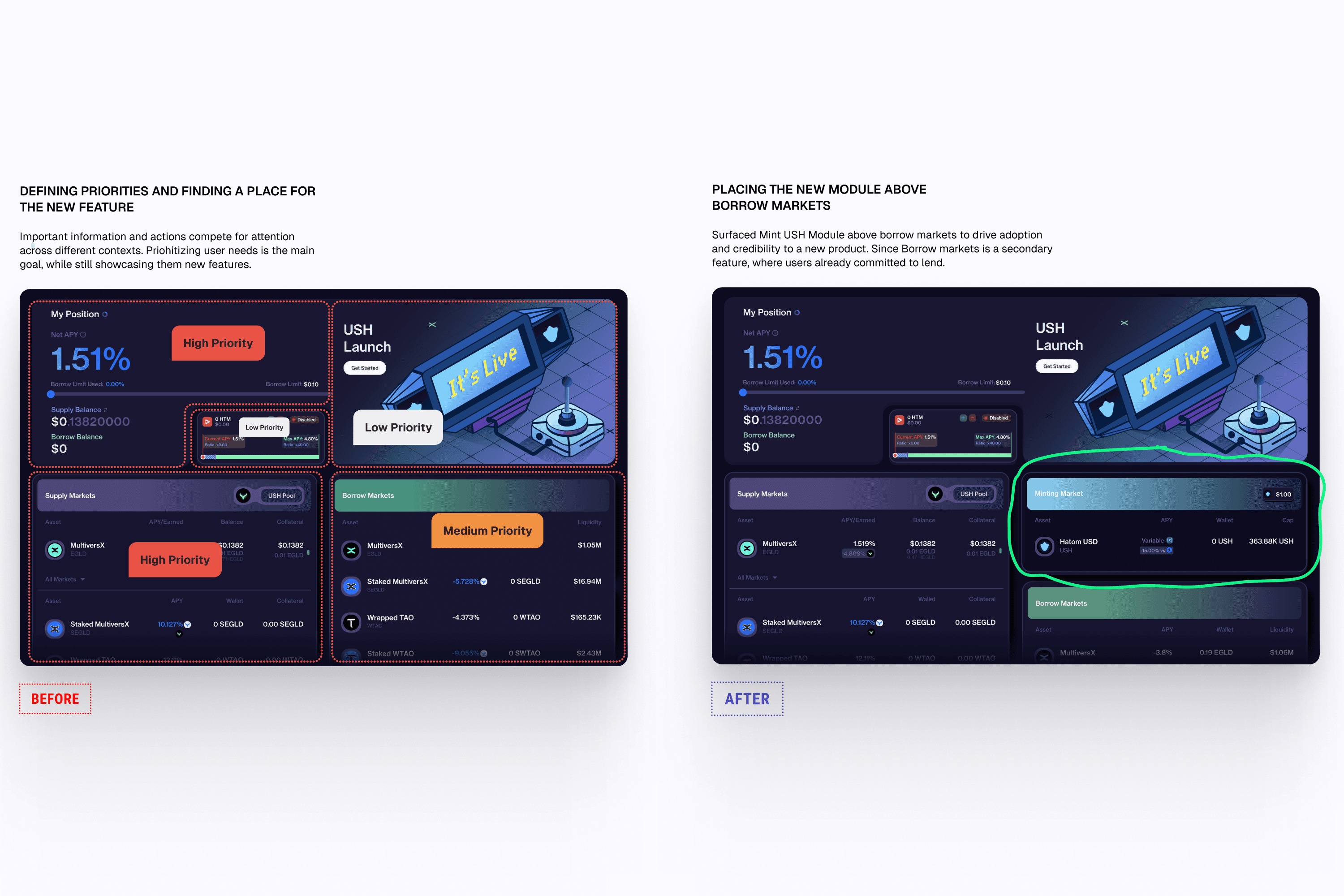
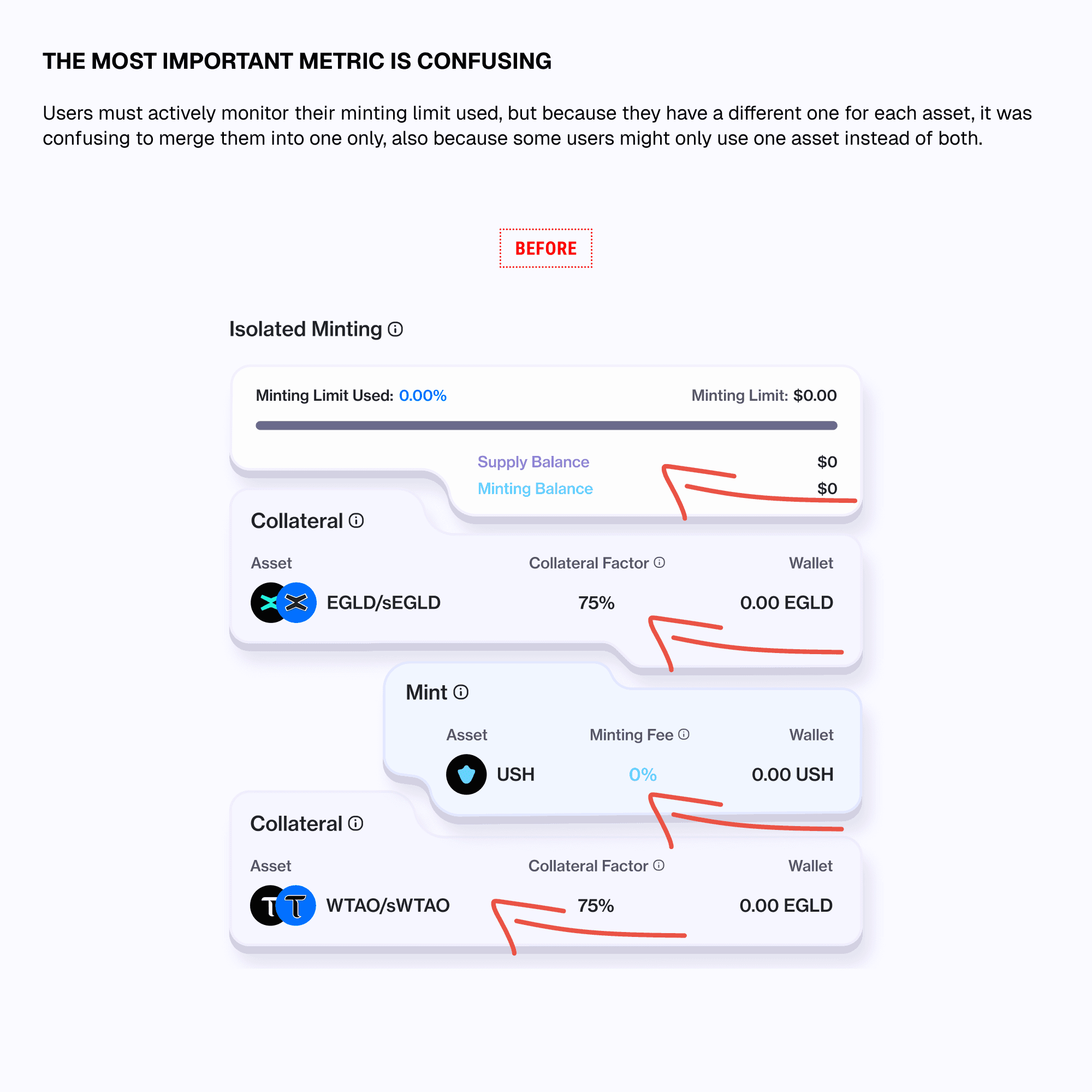
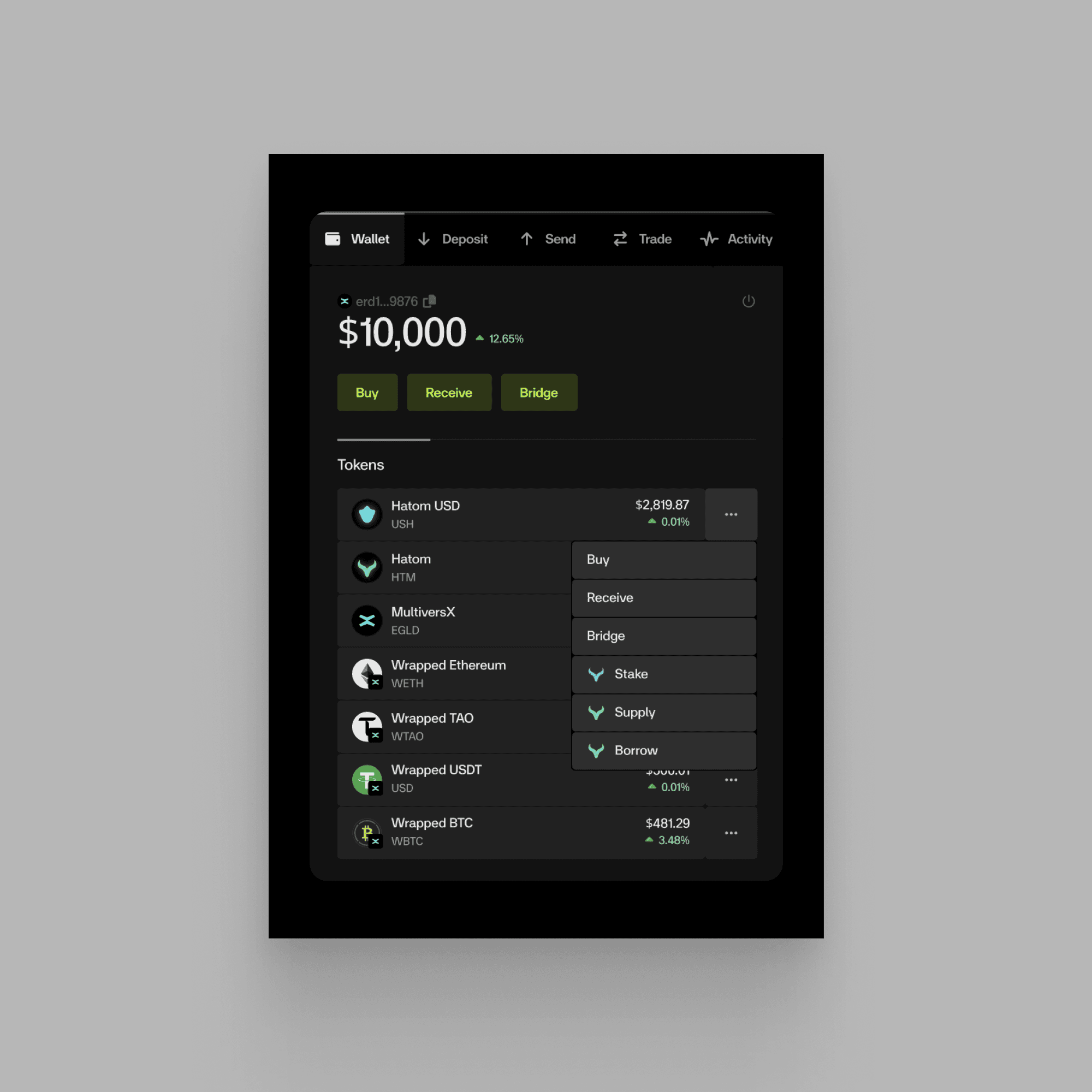
Fixing a 2 in 1 module and increase usage by 74%.
Execution
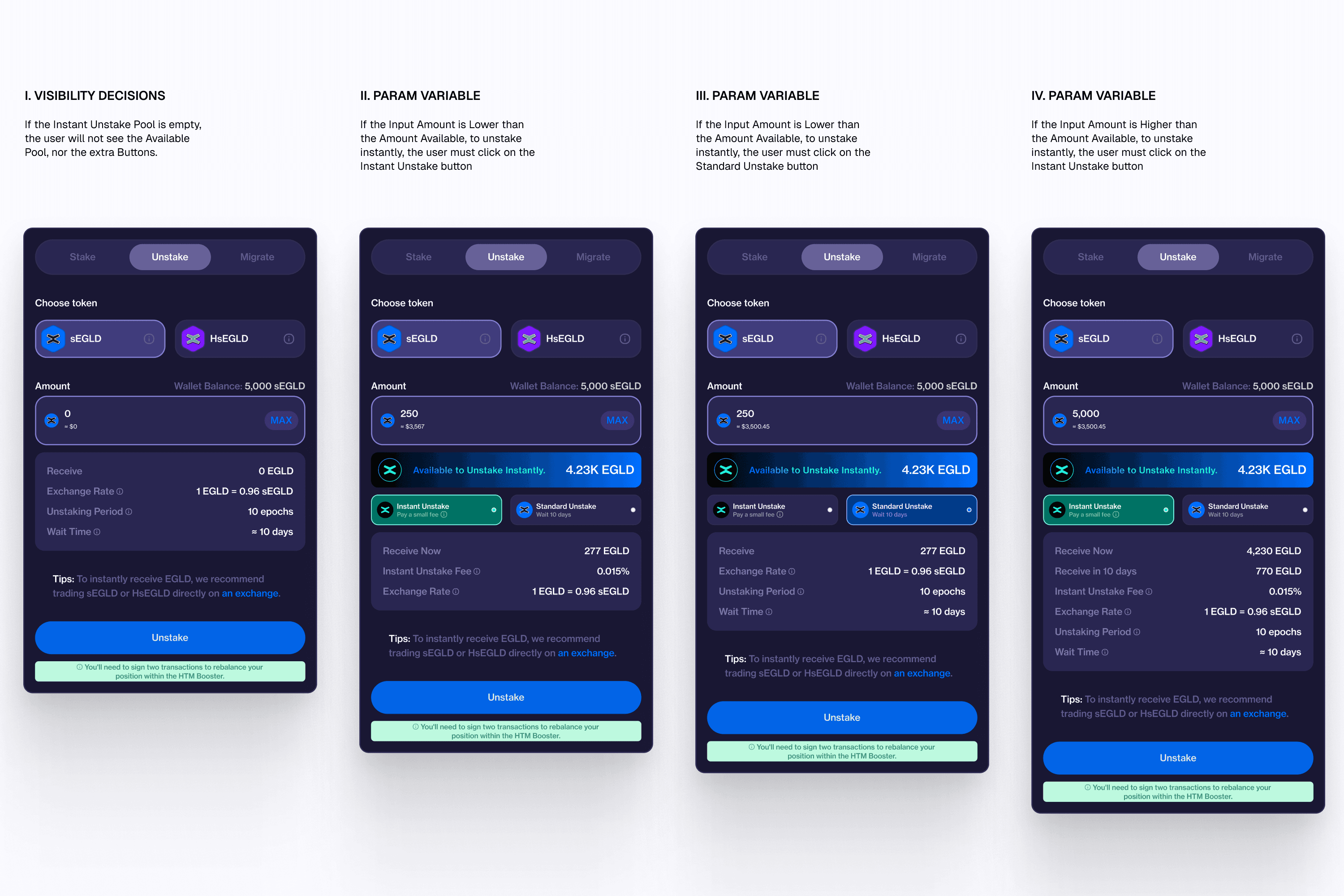
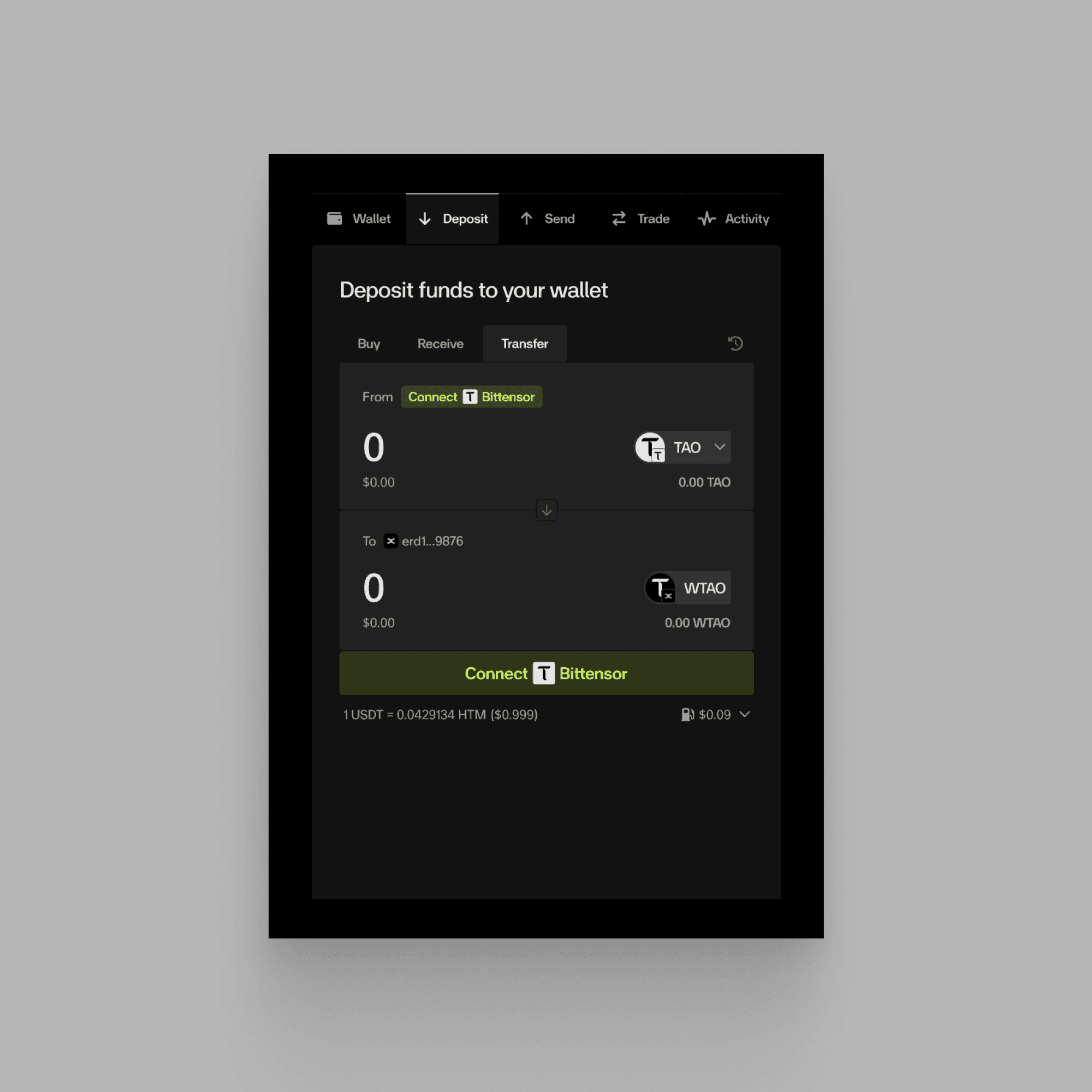
Adding a new unstake flow to simplify UX.
Ongoing Work (V2)
The product is currently evolving toward a more adaptive, state-driven experience.
This includes:
Interfaces that respond dynamically to user intent
Further reduction of unnecessary navigation and scrolling
More explicit guidance during complex decision points
The focus is shifting from interface clarity to decision clarity at scale
Ongoing Work (V2)
The product is currently evolving toward a more adaptive, state-driven experience.
This includes:
Interfaces that respond dynamically to user intent
Further reduction of unnecessary navigation and scrolling
More explicit guidance during complex decision points
The focus is shifting from interface clarity to decision clarity at scale
Execution
Fixing a 2 in 1 module and increase usage by 74%.
Execution
Adding a new unstake flow to simplify UX.

Total Deposits
$280M ATH
Revenue
Overview
Hatom is a fintech ecosystem where users actively manage deposits, loans, yield and risks. I led UX / UX improvements across lending, staking, and a stablecoin module to make complex financial actions easy to understand and control. We are now developing the V2 of the app.
Hatom is a fintech ecosystem where users actively manage deposits, loans, yield and risks.
I led UX / UX improvements across lending, staking, and a stablecoin module to make complex financial actions easy to understand and control. We are now developing the V2 of the app.
Problem
Hatom brings together multiple financial mechanisms into a single ecosystem, introducing complexity across different product areas. Users needed to navigate dense financial inputs, understand new features within existing flows, and make decisions involving timing, fees, and liquidity.
The challenge was not only presenting information, but structuring each interaction so users could clearly understand what to do and why. Without clear hierarchy and guidance, critical details were fragmented, making decisions harder and increasing cognitive load.
Problem
Hatom brings together multiple financial mechanisms into a single ecosystem, introducing complexity across different product areas. Users needed to navigate dense financial inputs, understand new features within existing flows, and make decisions involving timing, fees, and liquidity.
The challenge was not only presenting information, but structuring each interaction so users could clearly understand what to do and why. Without clear hierarchy and guidance, critical details were fragmented, making decisions harder and increasing cognitive load.
Insights
In high-stakes financial flows, users don’t just need information — they need clarity on consequences.
The friction came from:
Unclear relationship between actions and outcomes
Hidden trade-offs between speed, cost, and availability
Lack of feedback during decision-making moments
Users weren’t unsure about the interface — they were unsure about the results of their actions.
Insights
In high-stakes financial flows, users don’t just need information — they need clarity on consequences.
The friction came from:
Unclear relationship between actions and outcomes
Hidden trade-offs between speed, cost, and availability
Lack of feedback during decision-making moments
Users weren’t unsure about the interface — they were unsure about the results of their actions.
Execution
Fixing a 2 in 1 module and increase usage by 74%.
Execution
Adding a new unstake flow to simplify UX.
Ongoing Work (V2)
The product is currently evolving toward a more adaptive, state-driven experience.
This includes:
Interfaces that respond dynamically to user intent
Further reduction of unnecessary navigation and scrolling
More explicit guidance during complex decision points
The focus is shifting from interface clarity to decision clarity at scale
Ongoing Work (V2)
The product is currently evolving toward a more adaptive, state-driven experience.
This includes:
Interfaces that respond dynamically to user intent
Further reduction of unnecessary navigation and scrolling
More explicit guidance during complex decision points
The focus is shifting from interface clarity to decision clarity at scale
Execution
Fixing a 2 in 1 module and increase usage by 74%.
Execution
Adding a new unstake flow to simplify UX.