Overview
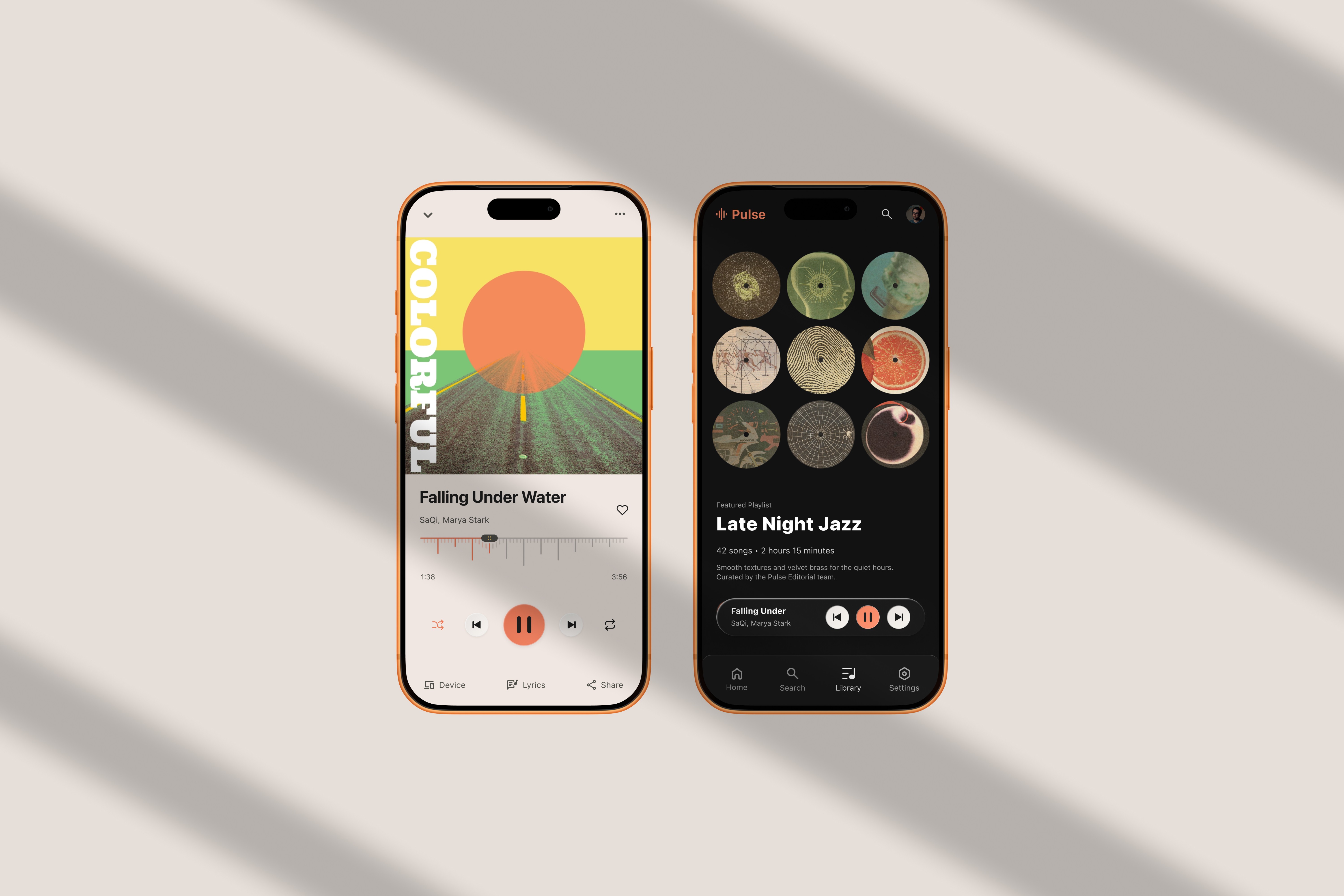
A mobile music streaming concept exploring light and dark mode design through a minimal, system-driven approach. The project focuses on accessibility, visual clarity, and creating a calm, expressive listening experience.
Challenges
Designing a minimal music interface introduced a balance between aesthetic simplicity and functional clarity. While the visual direction focused on soft, low-contrast tones inspired by Japandi design, this created challenges in meeting accessibility standards, particularly for text readability and interactive elements.
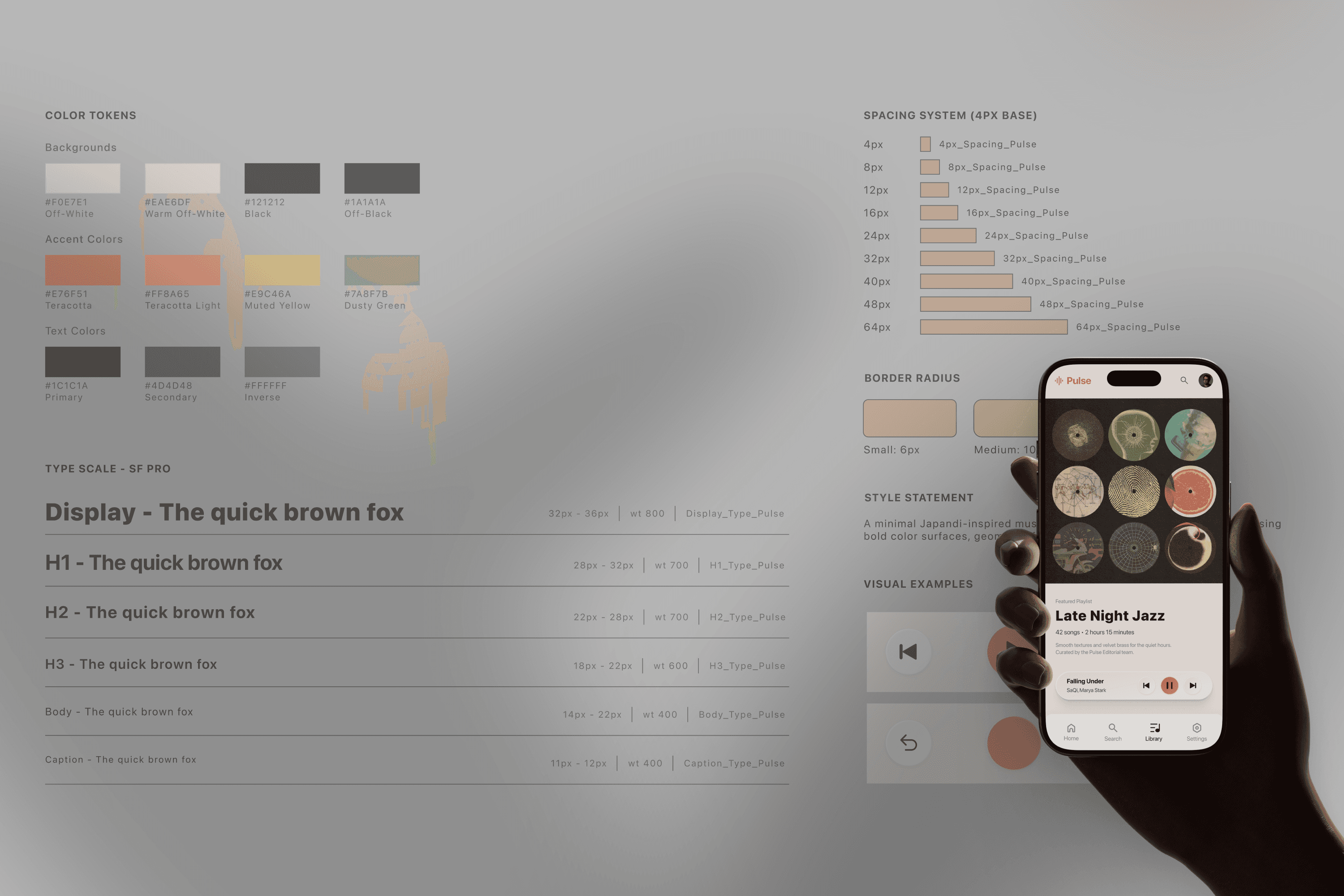
Another key challenge was designing dark mode as a fully considered system rather than a simple inversion of light mode. Maintaining visual hierarchy, contrast, and consistency across both themes required careful adjustment of color tokens and component behavior.
Additionally, playback interactions needed to feel intuitive and tactile without adding visual complexity. Achieving this involved refining component states, spacing, and feedback to ensure usability while preserving a calm, uncluttered interface.
Results
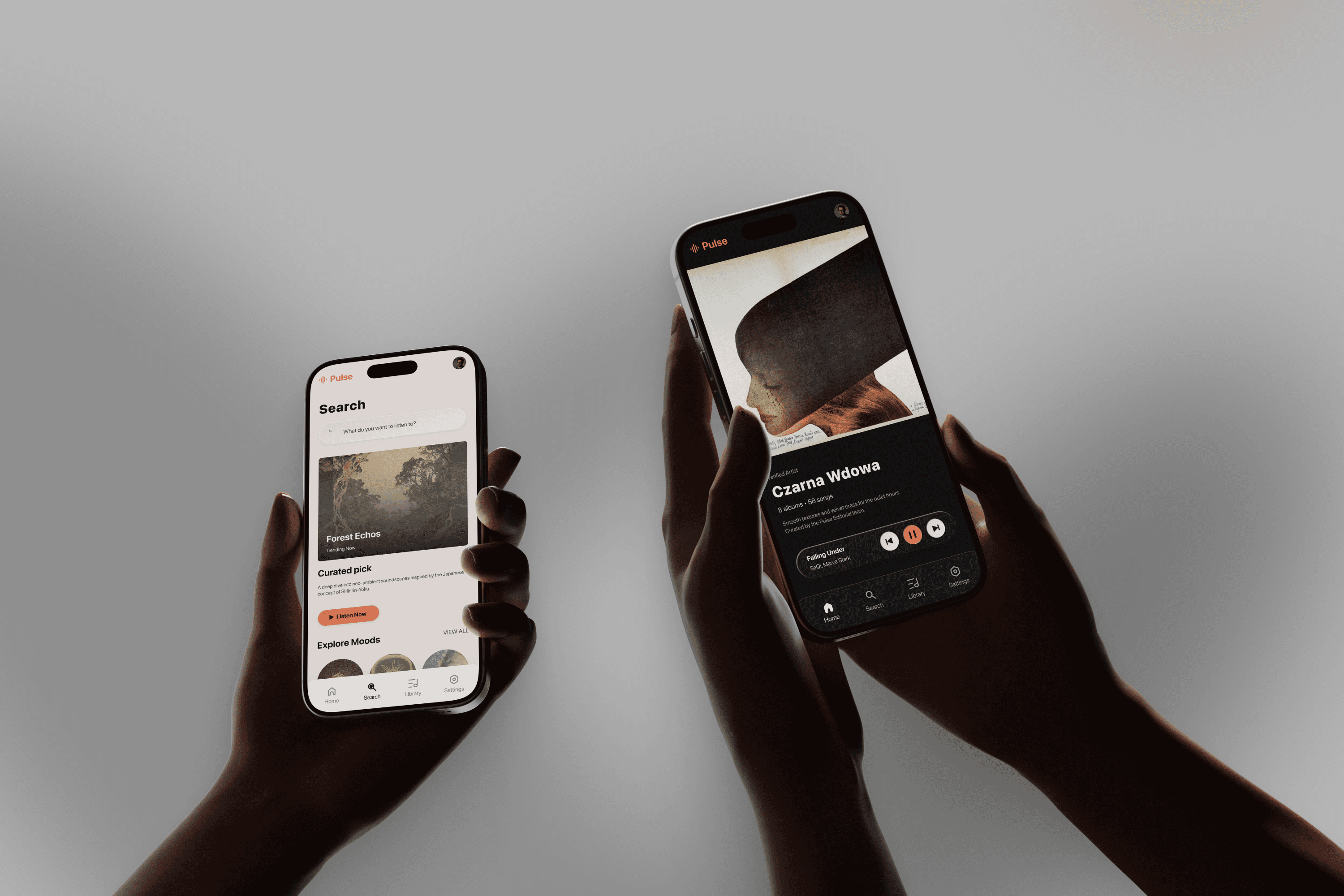
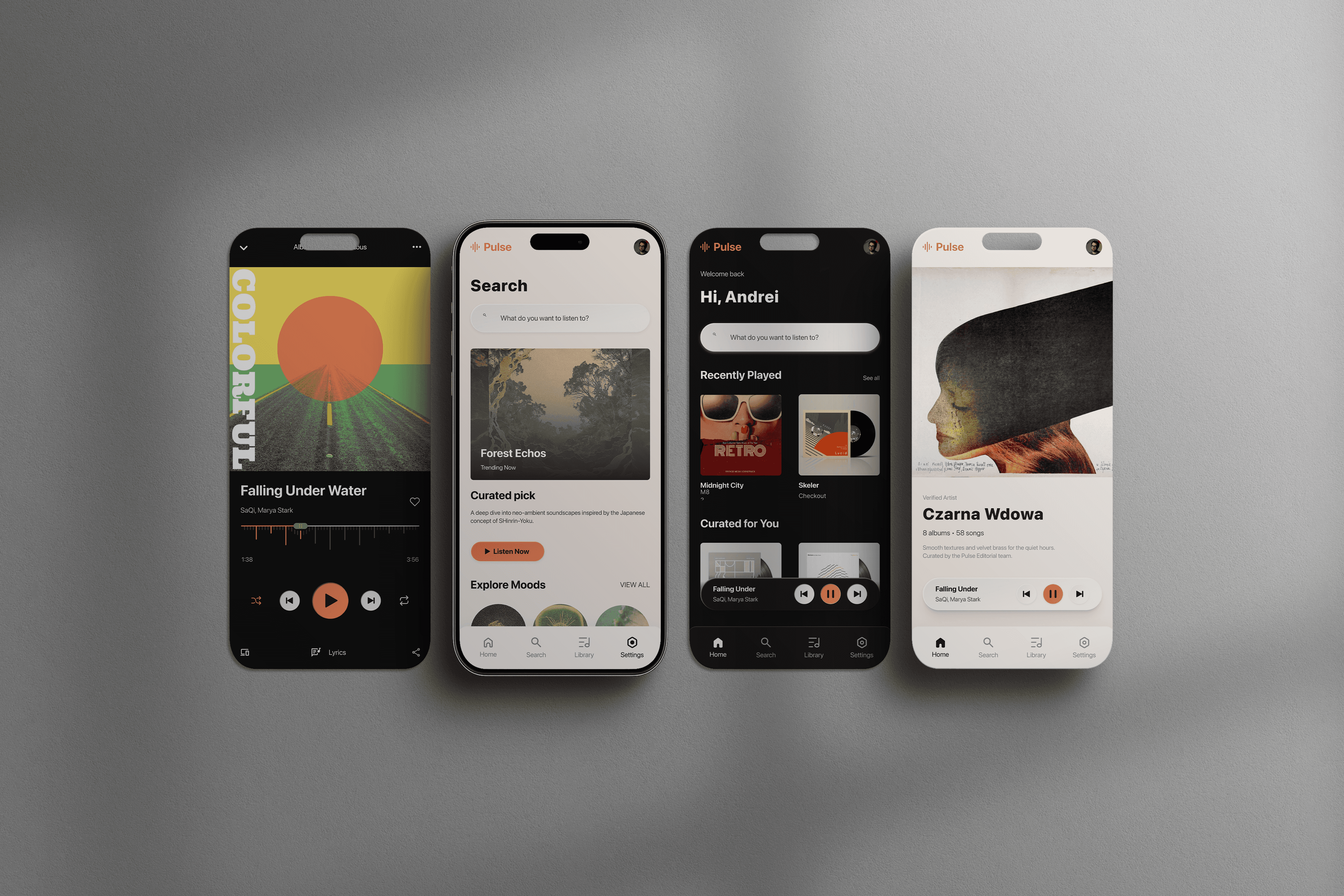
The final design resulted in a cohesive mobile experience built around a clear visual system and intuitive interactions. The introduction of a structured light and dark mode improved readability and usability across different environments, while maintaining a consistent visual identity.
The component-driven approach enabled scalability and consistency across screens, and the refined interaction patterns enhanced the overall user experience without adding unnecessary complexity. Overall, the project demonstrates a balanced integration of aesthetics, accessibility, and system thinking in a mobile product context.
Designed with intention, refined with care.
And probably tested at 2am with coffee.
©2026 AM.
Overview
A mobile music streaming concept exploring light and dark mode design through a minimal, system-driven approach. The project focuses on accessibility, visual clarity, and creating a calm, expressive listening experience.
Challenges
Designing a minimal music interface introduced a balance between aesthetic simplicity and functional clarity. While the visual direction focused on soft, low-contrast tones inspired by Japandi design, this created challenges in meeting accessibility standards, particularly for text readability and interactive elements.
Another key challenge was designing dark mode as a fully considered system rather than a simple inversion of light mode. Maintaining visual hierarchy, contrast, and consistency across both themes required careful adjustment of color tokens and component behavior.
Additionally, playback interactions needed to feel intuitive and tactile without adding visual complexity. Achieving this involved refining component states, spacing, and feedback to ensure usability while preserving a calm, uncluttered interface.
Results
The final design resulted in a cohesive mobile experience built around a clear visual system and intuitive interactions. The introduction of a structured light and dark mode improved readability and usability across different environments, while maintaining a consistent visual identity.
The component-driven approach enabled scalability and consistency across screens, and the refined interaction patterns enhanced the overall user experience without adding unnecessary complexity. Overall, the project demonstrates a balanced integration of aesthetics, accessibility, and system thinking in a mobile product context.
Designed with intention, refined with care.
And probably tested at 2am with coffee.
©2026 AM.