Overview
Soul is a multi-network lending and borrowing platform for managing financial assets in a decentralized manner. I led UI/UX and product flows to make complex financial decisions clear and actionable.
Problem
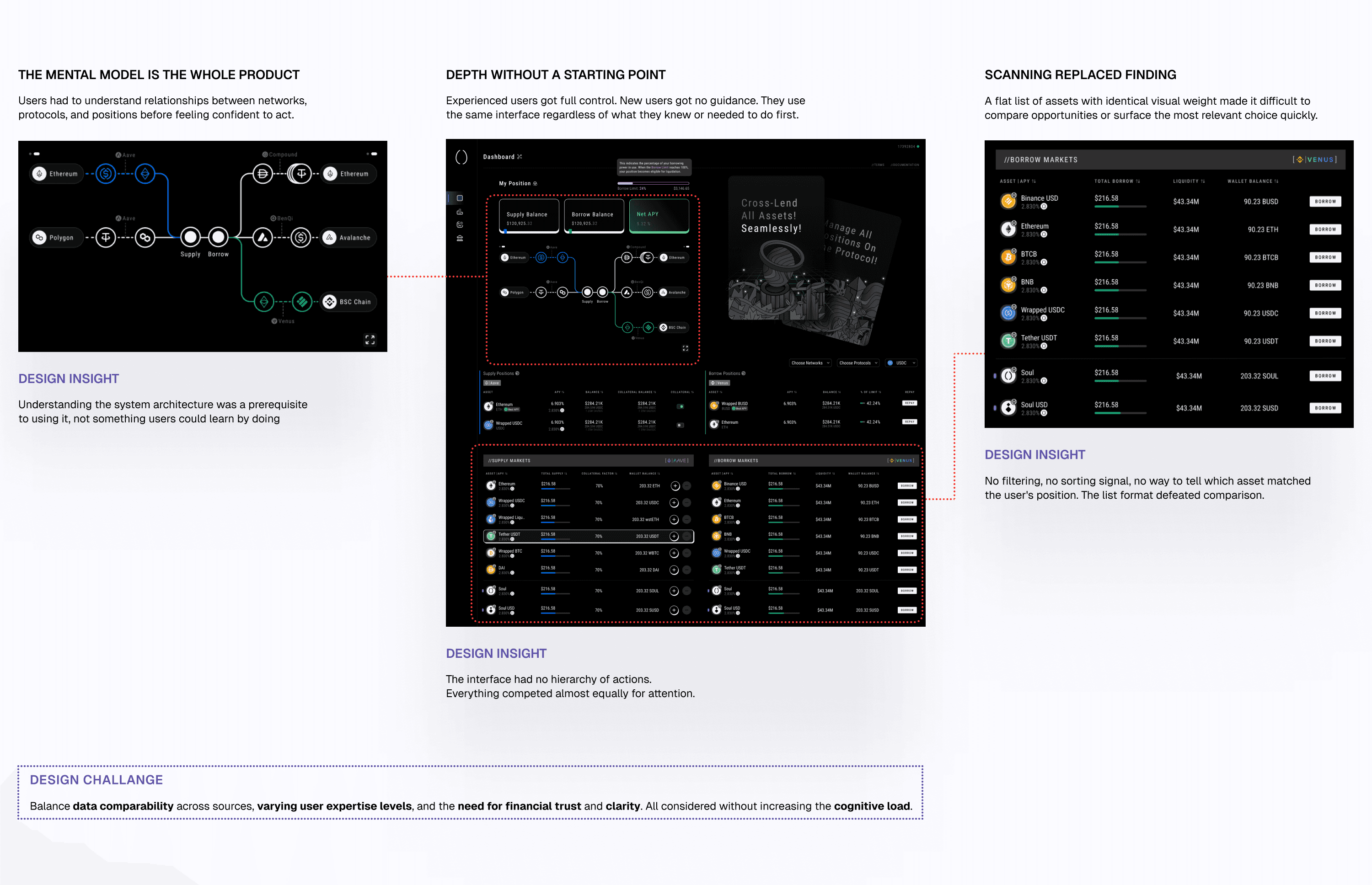
Designing a lending platform across multiple financial systems introduced three core challenges.
Data needed to be comparable across sources, users had different levels of experience, and financial decisions required strong trust and clarity. The challenge was balancing all three without increasing cognitive load.
Problem
Designing a lending platform across multiple financial systems introduced three core challenges.
Data needed to be comparable across sources, users had different levels of experience, and financial decisions required strong trust and clarity. The challenge was balancing all three without increasing cognitive load.
Insights
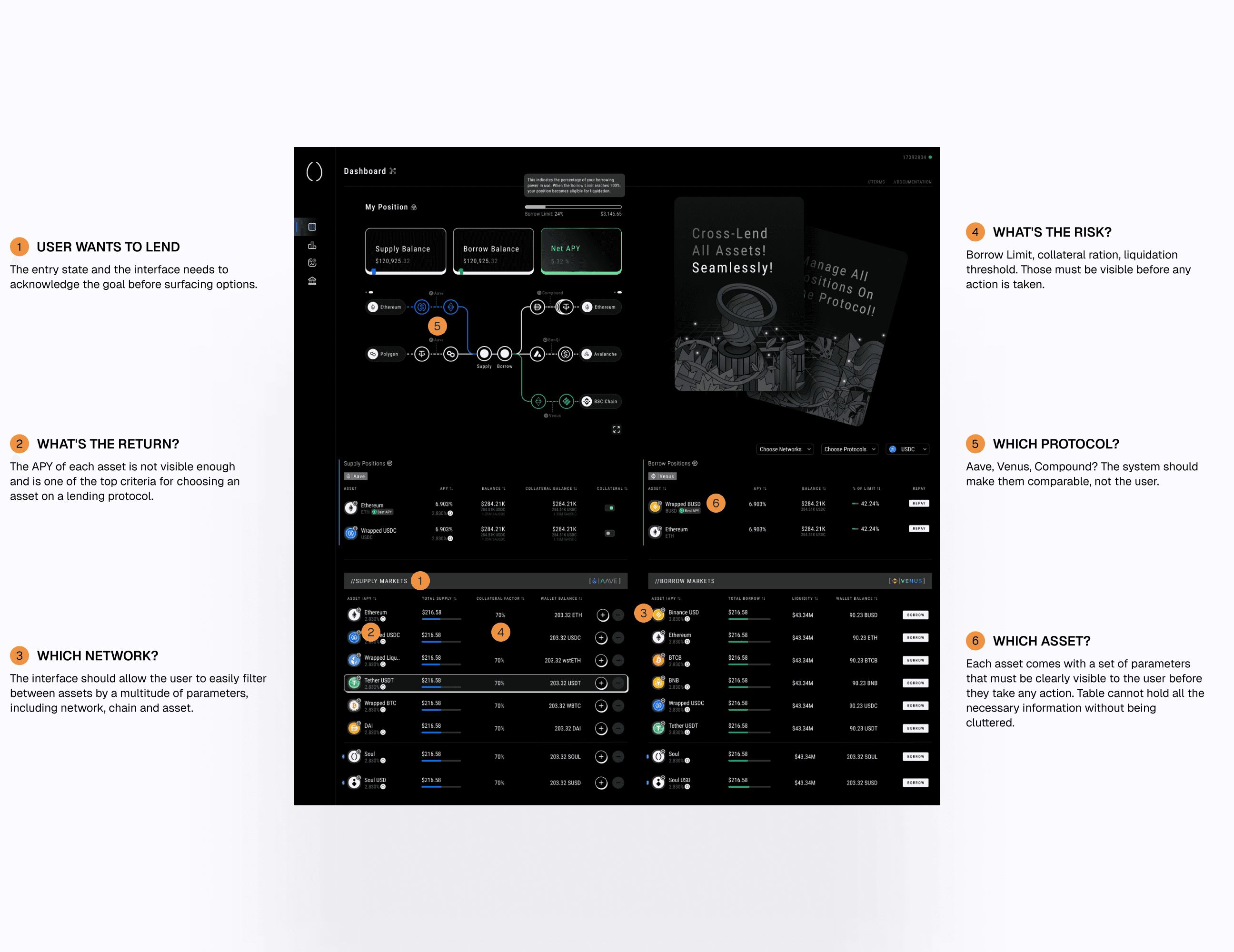
Users don’t struggle with features — they struggle with decision clarity.
Execution
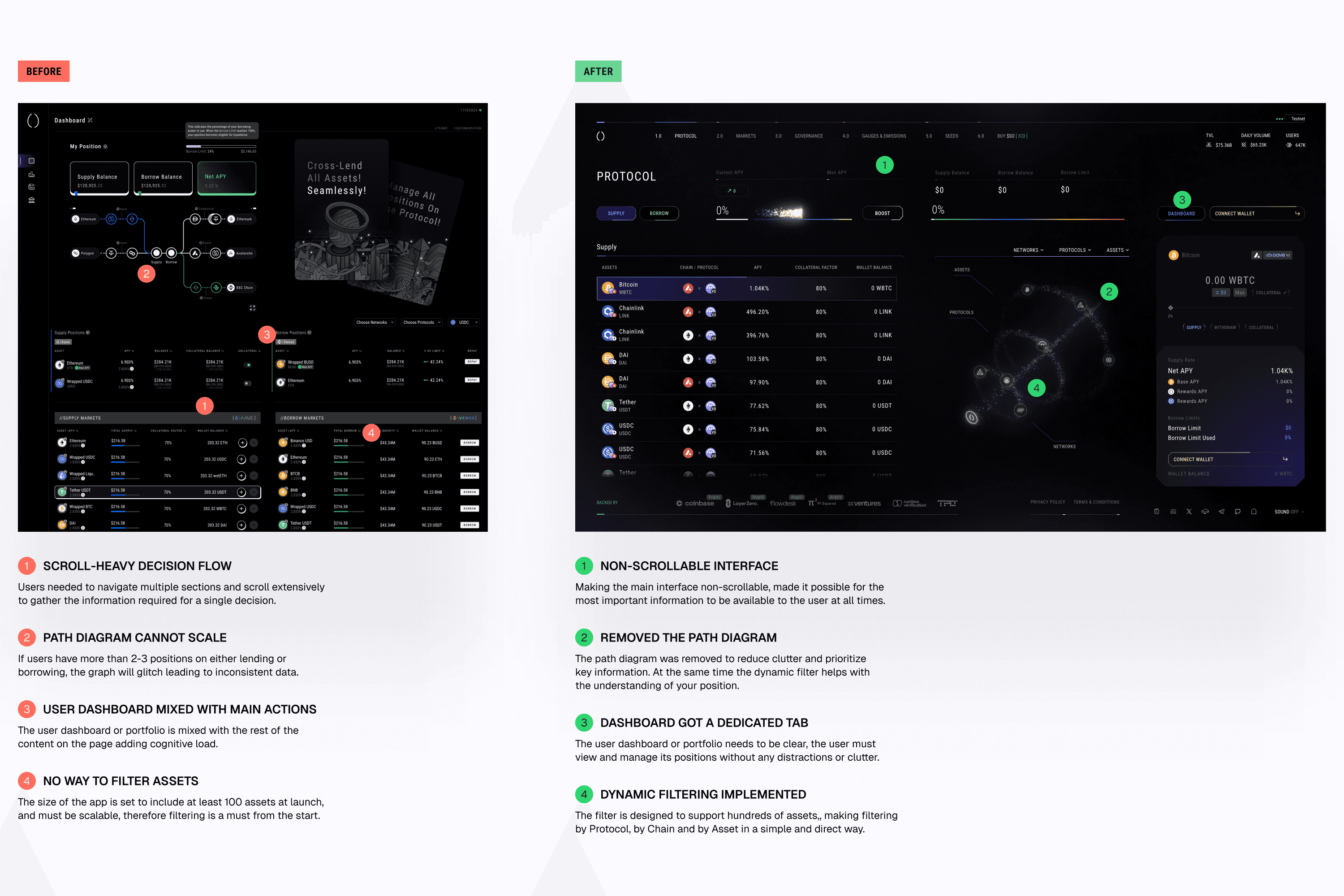
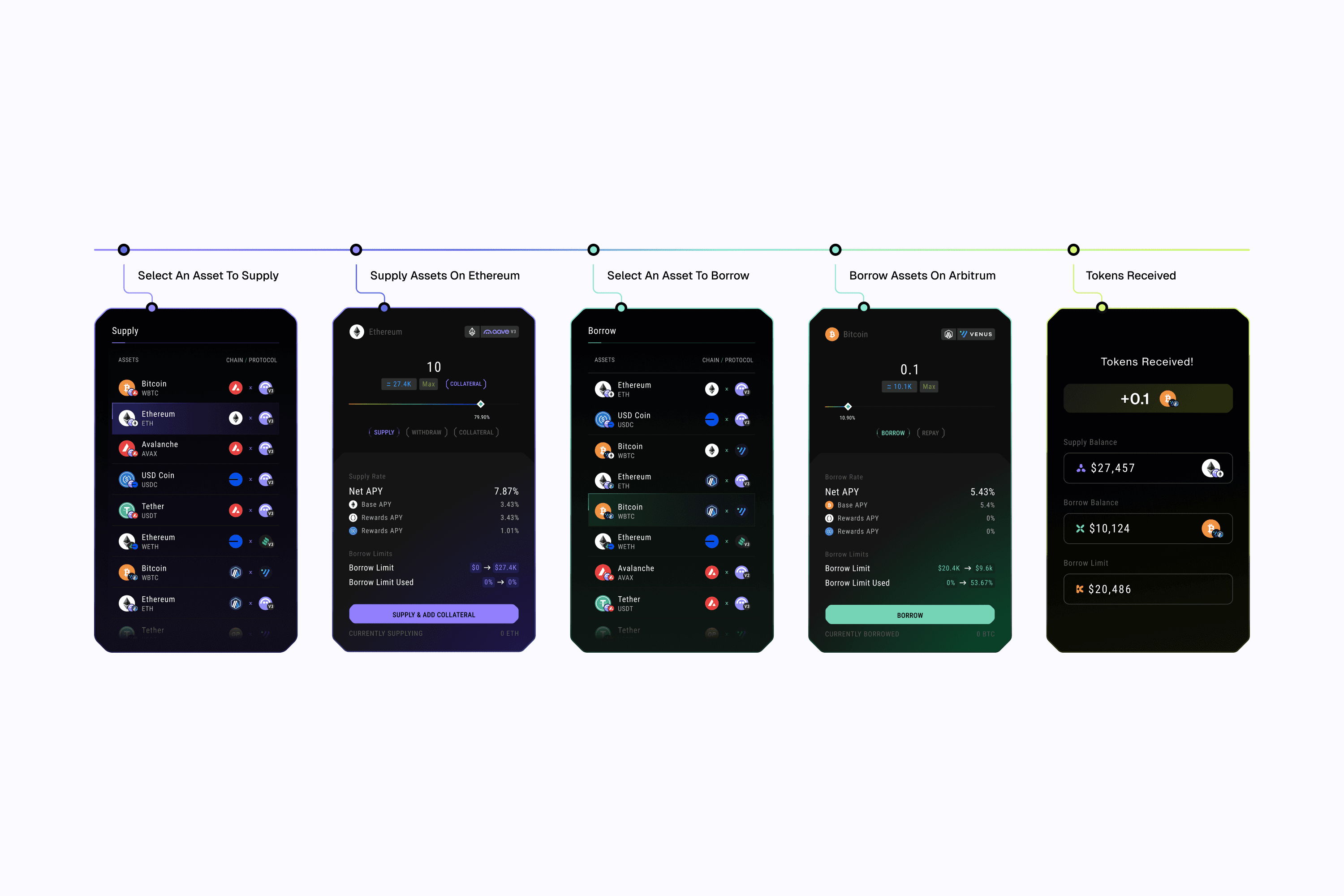
The solution focused on restructuring how users interact with financial data, rather than reducing overall system complexity. Instead of removing information, the goal was to make it more comparable, structured, and easier to act on. Key data and actions were brought into a single unified view, allowing users to evaluate opportunities and act without unnecessary navigation or scrolling.
Insights
Users don’t struggle with features — they struggle with decision clarity.
Execution
The solution focused on restructuring how users interact with financial data, rather than reducing overall system complexity. Instead of removing information, the goal was to make it more comparable, structured, and easier to act on. Key data and actions were brought into a single unified view, allowing users to evaluate opportunities and act without unnecessary navigation or scrolling.
Improved asset discovery
To reduce scanning across large asset lists, we introduced filtering by network, protocol and asset. This allowed users to narrow down available options based on their intent and current context. Instead of browsing all assets, users could quickly focus on the most relevant opportunities. This significantly improved discovery speed and reduced unnecessary cognitive load across the interface.
Improved asset discovery
To reduce scanning across large asset lists, we introduced filtering by network, protocol and asset. This allowed users to narrow down available options based on their intent and current context. Instead of browsing all assets, users could quickly focus on the most relevant opportunities. This significantly improved discovery speed and reduced unnecessary cognitive load across the interface.
Outcome
The redesigned experience improved how users interpret and act on financial data within a multi-network system.
By structuring information into comparable views and prioritizing key decision metrics, users could evaluate opportunities without relying on manual cross-referencing. This reduced cognitive load while increasing confidence in navigating complex lending scenarios.
Reflection
Designing for complex financial systems required moving beyond simplification and focusing on structured clarity. Rather than removing depth, the challenge was organizing information in a way that supports different levels of user expertise without fragmenting the experience. This reinforced the importance of designing around decision-making, not just data presentation.
Outcome
The redesigned experience improved how users interpret and act on financial data within a multi-network system. By structuring information into comparable views and prioritizing key decision metrics, users could evaluate opportunities without relying on manual cross-referencing. This reduced cognitive load while increasing confidence in navigating complex lending scenarios.
Reflection
Designing for complex financial systems required moving beyond simplification and focusing on structured clarity. Rather than removing depth, the challenge was organizing information in a way that supports different levels of user expertise without fragmenting the experience. This reinforced the importance of designing around decision-making, not just data presentation.

Recognition
Winner of Proof of Pitch 2024
1st place globally
€1M+ in total prizes
€30K CoinTelegraph media grant
€25K AWS credits
This recognition validated both the product vision and the clarity of its execution.
Recognition
Winner of Proof of Pitch 2024
1st place globally
€1M+ in total prizes
€30K CoinTelegraph media grant
€25K AWS credits
This recognition validated both the product vision and the clarity of its execution.



Overview
Soul is a multi-network lending and borrowing platform for managing financial assets in a decentralized manner. I led UI/UX and product flows to make complex financial decisions clear and actionable.
Problem
Designing a lending platform across multiple financial systems introduced three core challenges.
Data needed to be comparable across sources, users had different levels of experience, and financial decisions required strong trust and clarity. The challenge was balancing all three without increasing cognitive load.
Problem
Designing a lending platform across multiple financial systems introduced three core challenges.
Data needed to be comparable across sources, users had different levels of experience, and financial decisions required strong trust and clarity. The challenge was balancing all three without increasing cognitive load.
Insights
Users don’t struggle with features — they struggle with decision clarity.
Execution
The solution focused on restructuring how users interact with financial data, rather than reducing overall system complexity. Instead of removing information, the goal was to make it more comparable, structured, and easier to act on. Key data and actions were brought into a single unified view, allowing users to evaluate opportunities and act without unnecessary navigation or scrolling.
Insights
Users don’t struggle with features — they struggle with decision clarity.
Execution
The solution focused on restructuring how users interact with financial data, rather than reducing overall system complexity. Instead of removing information, the goal was to make it more comparable, structured, and easier to act on. Key data and actions were brought into a single unified view, allowing users to evaluate opportunities and act without unnecessary navigation or scrolling.
Improved asset discovery
To reduce scanning across large asset lists, we introduced filtering by network, protocol and asset. This allowed users to narrow down available options based on their intent and current context. Instead of browsing all assets, users could quickly focus on the most relevant opportunities. This significantly improved discovery speed and reduced unnecessary cognitive load across the interface.
Improved asset discovery
To reduce scanning across large asset lists, we introduced filtering by network, protocol and asset. This allowed users to narrow down available options based on their intent and current context. Instead of browsing all assets, users could quickly focus on the most relevant opportunities. This significantly improved discovery speed and reduced unnecessary cognitive load across the interface.
Outcome
The redesigned experience improved how users interpret and act on financial data within a multi-network system.
By structuring information into comparable views and prioritizing key decision metrics, users could evaluate opportunities without relying on manual cross-referencing. This reduced cognitive load while increasing confidence in navigating complex lending scenarios.
Reflection
Designing for complex financial systems required moving beyond simplification and focusing on structured clarity. Rather than removing depth, the challenge was organizing information in a way that supports different levels of user expertise without fragmenting the experience. This reinforced the importance of designing around decision-making, not just data presentation.
Outcome
The redesigned experience improved how users interpret and act on financial data within a multi-network system. By structuring information into comparable views and prioritizing key decision metrics, users could evaluate opportunities without relying on manual cross-referencing. This reduced cognitive load while increasing confidence in navigating complex lending scenarios.
Reflection
Designing for complex financial systems required moving beyond simplification and focusing on structured clarity. Rather than removing depth, the challenge was organizing information in a way that supports different levels of user expertise without fragmenting the experience. This reinforced the importance of designing around decision-making, not just data presentation.
Recognition
Winner of Proof of Pitch 2024
1st place globally
€1M+ in total prizes
€30K CoinTelegraph media grant
€25K AWS credits
This recognition validated both the product vision and the clarity of its execution.
Recognition
Winner of Proof of Pitch 2024
1st place globally
€1M+ in total prizes
€30K CoinTelegraph media grant
€25K AWS credits
This recognition validated both the product vision and the clarity of its execution.